ART DIRECTION: FENTY BEAUTY
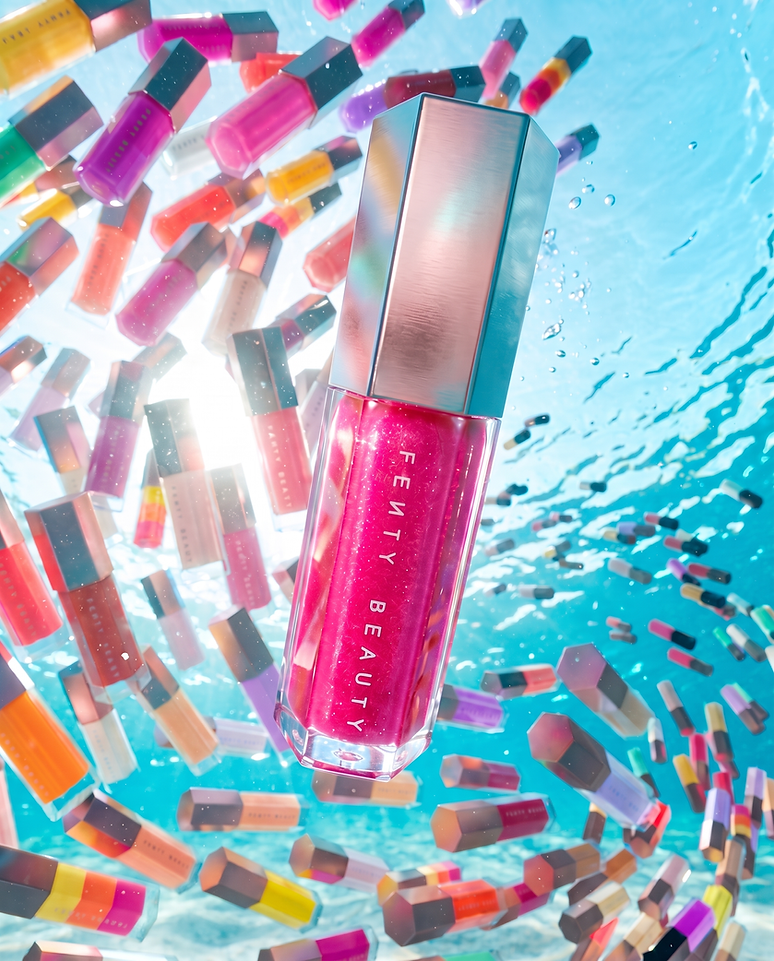
Art Direction Exercise: Fenty Beauty. An underwater swarm of gloss, backlit through the surface, with one hero tube in the foreground. Process: built in Blender with Claude, textured with AI.

ART DIRECTION: GUCCI
Art direction exercise for Gucci: Gucci fragrances reimagined at night, featuring insects from Vittorio Accornero de Testa’s illustrations that have never before been brought to light.


ART DIRECTION: GIVENCHY
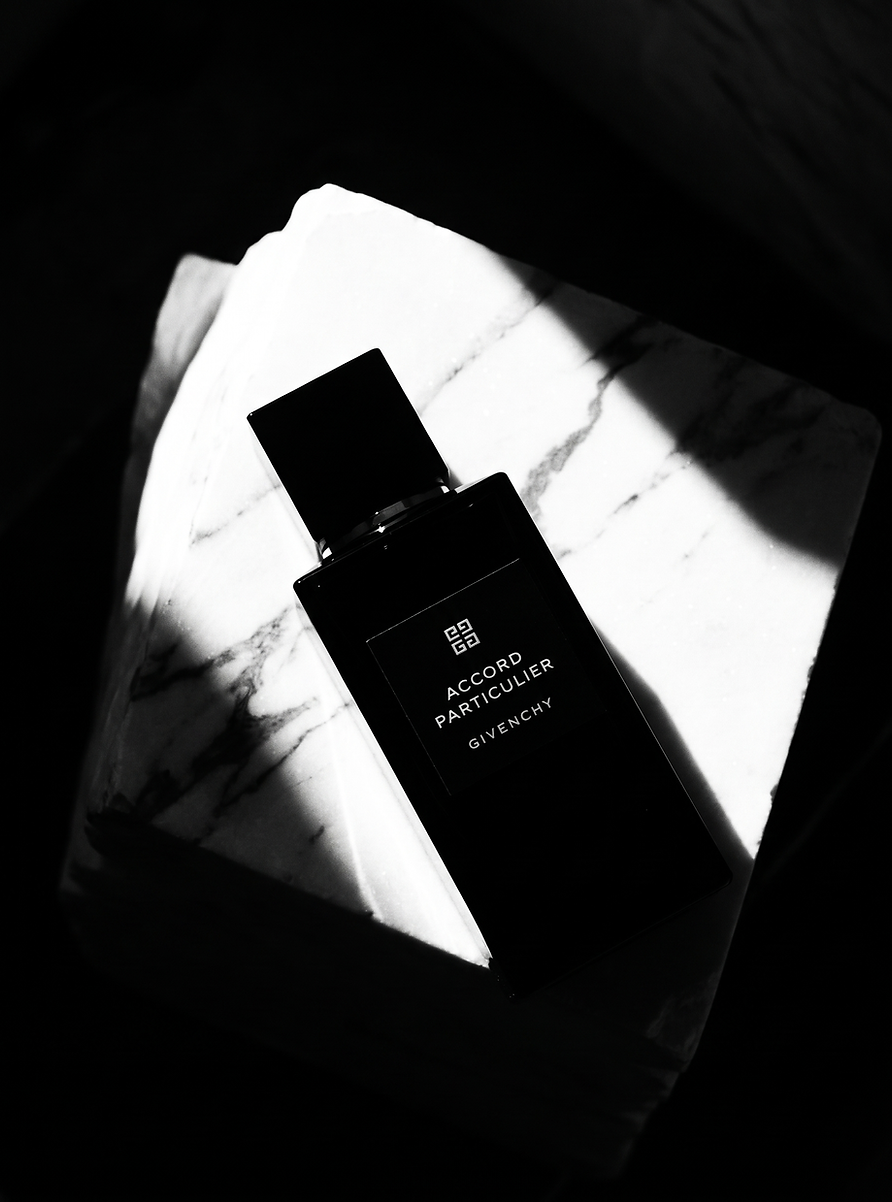
Art direction exercise for Givenchy, L'Accord Particulier. The Givenchy woman navigating adjacent visual territories with quiet command and architectural mystery.


ART DIRECTION: YSL
Art direction exercise for YSL Libre, testing an authorial AI pipeline. Dua Lipa's stage wardrobe, reimagined for YSL, left behind on the sand and in the sea at the end of the day. The microphone, the corset, the boots, alone.


PROCESS: From the AI Art Direction Sketch to the Generation
The idea starts on paper or as a base generation, and we review it in a rough session with the creative team. Once the composition holds the insight or the brand ambiance, I build a Pencil + Photoshop rough. A depth map, drawn by hand or built with Claude and Blender through MCP, locks the space. Then I create or gather every element as a character sheet (perfume bottle, textures, background), in high quality, so the model returns clean results.
A master orchestrator prompt makes the elements work together. Then comes iteration: I keep a library of errors and near misses, and show the model what it is doing right or wrong. Each round gets closer to the target.
Where the model resists, I mix results in Photoshop to build the final composition, with a lot of relighting and retouching so it reads as photography. If the retouch was heavy, I regenerate the whole image, by zones with inpainting or through special filters, to restore photographic wholeness.


PROCESS FLOW
THE IP CLEARANCE
for ART DIRECTION
Most briefs now arrive with an AI-generated mood board. It is a workable starting point, but an image made from a text prompt has no human author, and anything copied closely from it inherits that gap. I work between that mood board and the final image, so that what you receive has a human author and a documented origin.
I use the mood board for intent only: mood, palette, subject. I do not reproduce it. The composition is redrawn from my own sketches, with depth maps or 3D where the image needs them, and the final imagery is built on that work. Where AI generation is used afterwards, it is applied on top of my sketches and compositions, and I rework the result by hand. Each stage is recorded.
I also review the mood board for resemblance to existing works, artists, or brands, and flag anything that should not carry into the final image. This is a visual review, not a legal opinion.
If a project is drawn by hand from the first thumbnail, none of this applies: authorship is direct.
What this means for rights
What I contribute (sketches, composition, selection, modification, retouching) is human-authored, documented, and can be assigned to the client. Any part of the image generated by AI without sufficient human contribution may not be protected by copyright in the US or the EU. The dossier identifies which parts those are, so you know exactly what you own and what you do not.
Confidentiality and prompt leaks
Feeding unreleased scripts or new product schematics into public AI generators can itself breach an NDA, since those tools may use what you submit to improve their models. I do not work with public-tier tools for this reason. Video generation runs on Luma at the Enterprise tier, which is contractually prohibited from training on anything submitted. Image generation runs on Google AI Studio, where the service terms exclude customer prompts, files, and outputs from model training. Your material stays yours.
Dossier handoff
What I deliver is not just the final generation. It is the full build, organized into files per shot. This includes the mood board received, every sketch, plate, generation, and 3D file that shaped the image, along with documentation of how each was created. If authorship is ever questioned, you will have a documented record, traceable from the very beginning of the project.
EXPLORATION, DISTILLATION & MIDJOURNEY
Cross-model distillation allows me to explore brand codes at scale. Distillation is a data curation process in which I work out the brand’s structural dreams and fears, using Keller’s Brand Resonance Pyramid and Kapferer’s Identity Prism, plus trajectory and several other trends of LLM research I have configured over months of personal experimentation. I source from multiple LLMs and then use a model as a judge to filter out obvious hallucinations. Personal revision comes after: I refine the master document so that everything stated is accurate to my perception of the brand, based on regular research. By then, I have a database to play with and use to execute prompts, based only on text. This process is ideal for quickly testing ideas in the brand’s language and creating moodboards quickly.


